In most organizations, procurement attention naturally gravitates toward the large, strategic spend categories. That’s where the big contracts live, where negotiations are complex, and where the financial stakes are highest. But ironically, it’s the other end of the spend curve that quietly undermines control and efficiency: tail spend.
Most procurement teams focus on their top 20% of suppliers - and for good reason. According to the well-known Pareto principle, these suppliers typically represent around 80% of total spend. Direct spend is analyzed in great detail to capture every possible saving tied to the production or trading of core products.
However, by focusing almost exclusively on this relatively small portion of the supplier base, organizations often overlook the hidden opportunities within indirect spend - especially the fragmented, under-managed long tail of suppliers.
Because each transaction seems insignificant on its own, tail spend rarely gets the priority or oversight it deserves. And that lack of attention is exactly what creates the bigger downstream issues:
- Limited visibility
- A heavy administrative burden to onboard unstrategic vendors and process their invoices
- Maverick spend
- Compliance gaps
- An audit trail so fragmented that no one can fully reconstruct it
In this blog post, we’ll explore why tail spend carries so much hidden impact — and how procurement teams can finally regain control.
When Fast Growth Reveals Even Faster Spend Leaks
To make this picture more concrete, imagine a young tech company that suddenly takes off. At the beginning, everyone buys what they need themselves: a laptop here, a new SaaS tool there, a designer hired for a one-off project, a freelance marketer paid on a personal invoice. No one thinks twice — after all, the company is small, moving fast, and revenue is growing.
Within a few years, the organization scales to 300 employees, operating in three countries. And that’s when the problems are coming to the surface.
- Duplicate SaaS subscriptions no one remembers buying
- Marketing agencies performing overlapping work
- Dozens of suppliers offering the same services at wildly different prices
- Invoices approved by people who no longer work there
- A full-time Finance team drowning in vendor onboarding and invoice matching
When they finally hire their first procurement manager, the person doesn’t start with strategic negotiations — they start by cleaning up thousands of euros per month in accidental, unmanaged, or unnecessary indirect purchases.
And this is where the opportunity lies.
Indirect vs. Direct: A Hidden Multimillion-Euro Opportunity
Benchmarks show just how much value a strong procurement function can create. Studies from CAPS Research indicate that organizations generate around US$2.5 million in savings per strategic procurement employee per year - roughly €2.3 - 2.5 million. And most of that value comes from direct spend.
But what happens when you apply that same level of discipline, insight, and structure to indirect categories - IT, facilities, marketing, professional services, and the long tail of suppliers?
The answer is: more than most organizations expect.
If a single strategic buyer can deliver €2.5 million in savings on direct categories, then imagine what applying that mindset to the currently untouched 80% of your supplier base could unlock.
The Path Forward: Digitizing and Structuring Indirect P2P
If you want to approach this thoroughly, with a long-term vision and the backing of your Finance stakeholders, the answer lies in digitizing and streamlining your end-to-end Purchase-to-Pay (P2P) process. This includes everything from supplier collaboration on quotes, catalogs, and purchase orders to flexible yet controlled payment options for purchases that may not require a traditional PO at all.
Here are three practical steps to start unlocking value in your indirect P2P process:
1. Use Virtual Cards
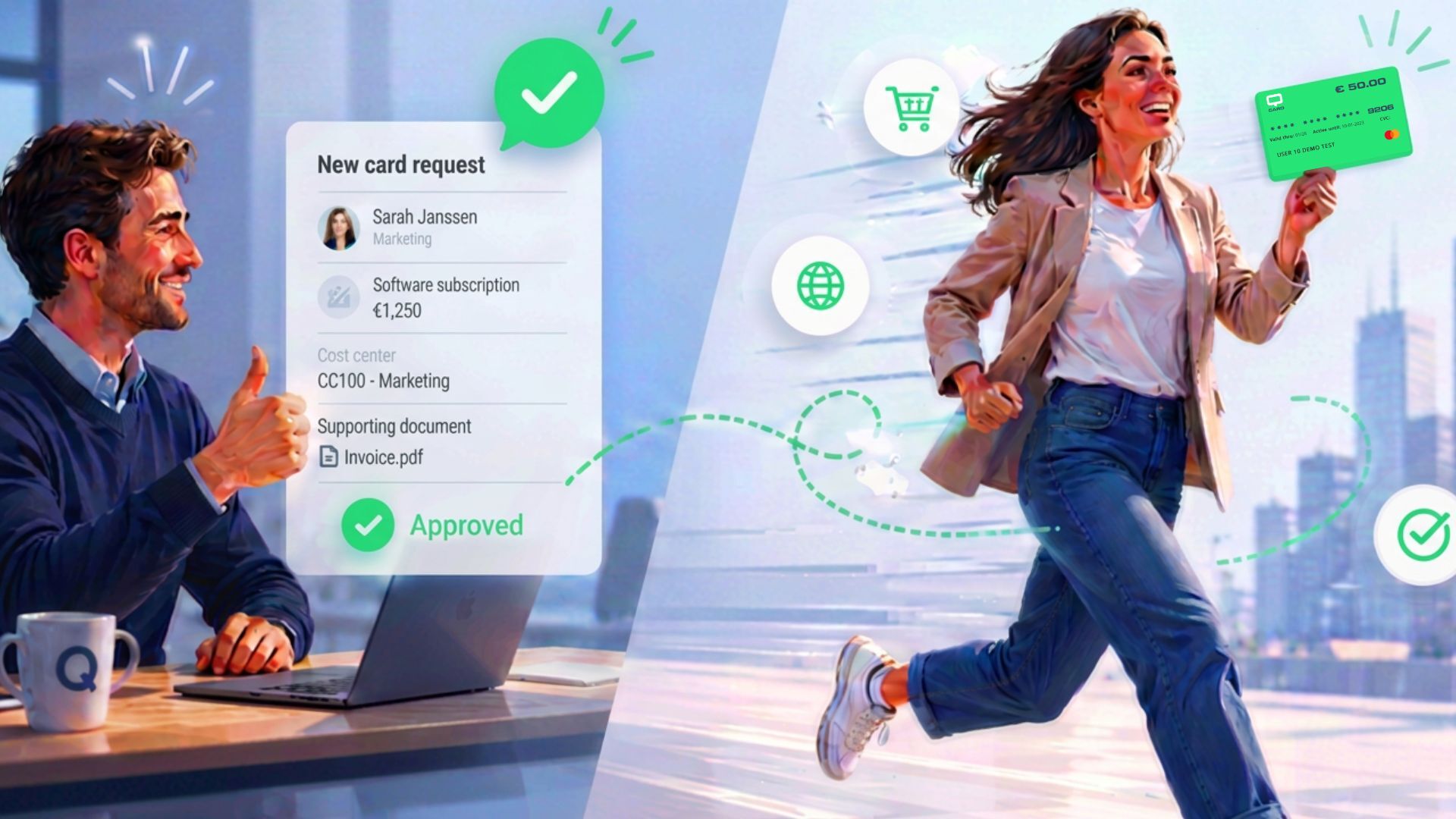
Bring your tail spend under control with a virtual card platform that allows you to:
- Pre-approve purchase requests, reducing maverick spend.
- Eliminate manual payments to suppliers.
- Avoid post-processing administrative work in your ERP system.
Key benefits:
- Less administrative effort – Coding data can be captured at the moment of purchase and enriched by the virtual card platform with transactional data, then automatically synced with your ERP or financial system via integration (especially if you have a strong integration partner).
- Reduced maverick spend – Thanks to built-in pre-approval capabilities.
- Improved visibility – Identify tail suppliers who should be part of your preferred supplier base. Use real-time data from your virtual card platform to strengthen your position at the negotiation table.
2. Implement Catalogs
Make purchasing easy - and compliant - for your employees with a modern catalog solution such as Tradeshift BUY.
By negotiating the catalog offers upfront with suppliers on the Tradeshift network, you can offer employees a curated catalog of indirect products your company regularly needs. This gives them a purchasing experience similar to what they’re used to in their personal lives - intuitive, simple, and fast.
The result?
- Higher adoption rates.
- Better spend control.
- Real ROI from your supplier agreements.
Combine this with your virtual card setup, and you’ll have a seamless process from purchase request to payment.
3. Adopt E-Invoicing & AP Automation
Finally, streamline payments and supplier collaboration with the remaining suppliers via Tradeshift PAY or another e-invoicing platform that is not simply based on scanning and capturing.
More innovative E-invoicing & AP Automation helps you:
- Get truly digital invoices and drastically reduce manual invoice handling.
- Speed up approvals and payments.
- Automate invoice coding through AI
- Improve transparency and compliance across your indirect spend.
- Gain access to rich data for better spend analytics and forecasting.
This not only reduces cost and effort but also provides the visibility needed to turn indirect spend into a strategic advantage.
Final Thoughts
Indirect spend may not be where your company started focusing on, but it’s where the next wave of savings and process improvements can be found. By digitizing the Purchase-to-Pay process - from request to reconciliation - you can finally get control, visibility, efficiencies and therefore strategic value from the overlooked 80% of your supplier base.


.png?width=40&height=40&name=linkedinpfwarren%20(1).png)